
Our Picks

Briggs & Riley Baseline Domestic Carry-On

Travelpro Platinum Elite Carry-On
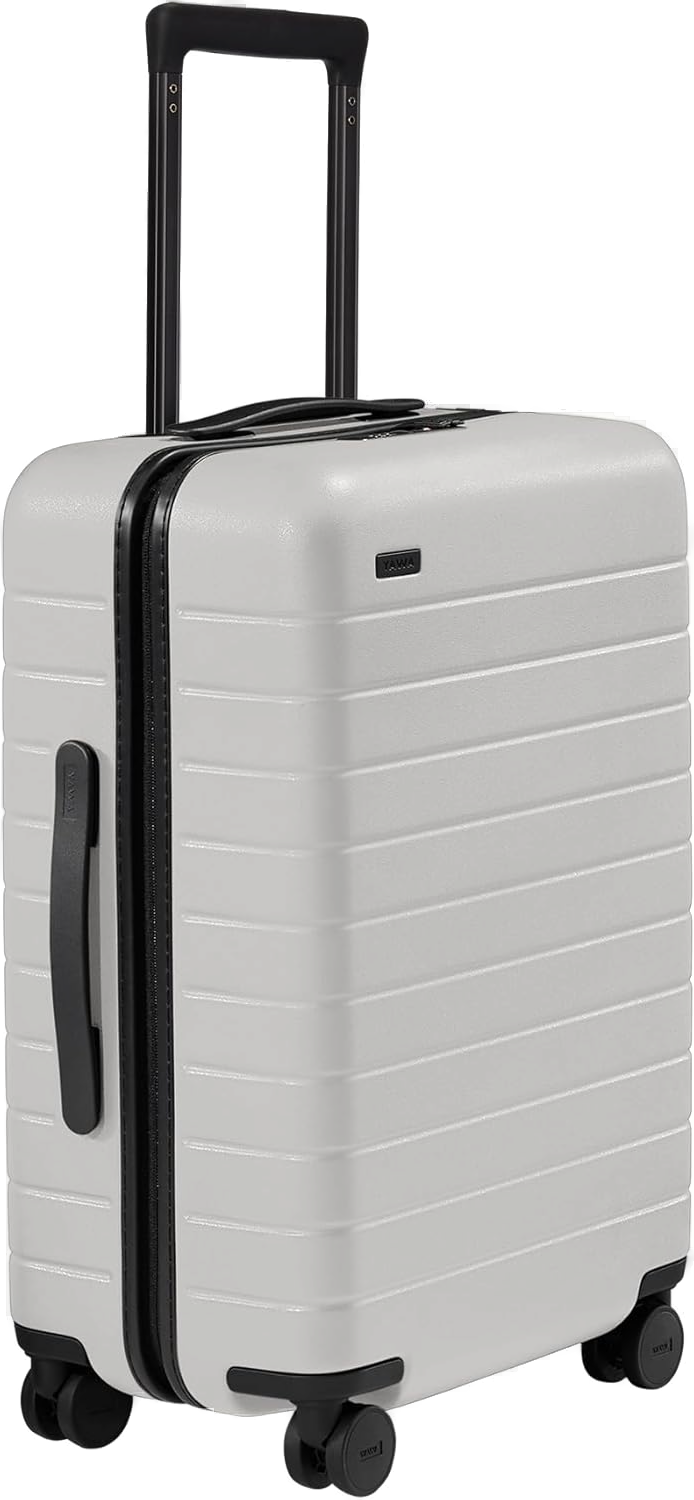
Away The Bigger Carry-On

Eagle Creek Tarmac XE 2-Wheel Carry-On
Why Cheap Luggage Dies at the Airport
The wheels go first. Every time.
Cheap carry-ons use small, externally mounted spinner wheels attached with plastic housings. Baggage handlers throw your bag onto a conveyor belt from three feet up. The wheels, sticking out from the body like training wheels on a bicycle, absorb the impact. One hard drop cracks the housing. Two more and a wheel snaps off entirely.
This is the most common luggage failure, and it's designed into the product. Spinner wheels give you smooth rolling on flat airport floors, but they're the most exposed, fragile component on the bag. Two-wheel rollaboards tuck their wheels inside the frame where they're protected. That's why airline crews overwhelmingly carry two-wheelers. They know what survives the belt.
The second failure point is the telescoping handle. Budget luggage uses thin aluminum tubes with weak locking mechanisms. After a year of regular use, the handle won't lock in the extended position. It collapses mid-roll. There's no fixing this at home.
If you travel more than four times a year, the math changes. A $100 bag that lasts two years costs you $50/year. A $300 bag with a lifetime warranty costs you $300 total, forever.
What Actually Matters in a Carry-On
Shell material: Ballistic nylon beats polycarbonate for durability. Hard shells crack. Nylon flexes, absorbs impacts, and doesn't show scuffs. The trade-off: nylon bags are slightly heavier and can't be wiped clean as easily.
Wheel type: Two-wheelers last longer. Spinners roll smoother on flat surfaces. If you travel primarily through airports and hotels, spinners are fine as long as they're backed by a real warranty. If your travel involves cobblestones, train stations, or rough streets, go two-wheel.
Handle system: This is where brands separate. Good handles use thick aluminum or steel tubes with positive-lock mechanisms that click firmly into position. Cheap handles wobble and eventually fail to lock. You can't test this in a store after one pull. You learn it after 50 trips.
Warranty: The single most important differentiator in BIFL luggage. A true lifetime warranty (Briggs & Riley) means they'll fix your bag no matter what happened to it. A limited warranty (most brands) excludes airline damage, which is the primary cause of luggage failure. Read the terms, not the marketing.
Four Carry-Ons Worth Buying
Briggs & Riley Baseline — The Lifetime Bag

Briggs & Riley Baseline Domestic Carry-On
Pros
- True lifetime warranty — covers any damage, any reason
- Outsider handle gives flat interior packing space
- Self-repairing zippers and ballistic nylon shell
Cons
- Expensive (~$700)
- Heavy at ~9 lbs empty
- Some reports of slower warranty turnaround recently
Every luggage thread on Reddit ends the same way: someone says "Briggs & Riley" and the conversation is over. There's a reason.
The Baseline uses ballistic nylon with a frame that flexes without breaking. The "Outsider" handle system mounts externally, which means the telescoping tubes don't eat into your packing space. You get a flat interior with no handle intrusion. The zippers are self-repairing. The compression system actually works.
But the real product is the warranty. Briggs & Riley will repair any bag, for any reason, for the life of the bag. Not "defects in materials and workmanship." Any damage. Airline crushed your wheel? Fixed. Zipper ripped by TSA? Fixed. No proof of purchase required.
Honest downsides: Expensive. The Baseline Domestic carry-on runs around $700. It's also heavy for a carry-on at roughly 9 lbs empty. If you're flying budget carriers with strict weight limits, that's 9 lbs you can't pack. Some recent Reddit threads note warranty claim turnaround has gotten slower and pickier, though most claims still go through. This is a bag for people who travel monthly, not twice a year.
Travelpro Platinum Elite — What Flight Crews Actually Use
Walk through any airport crew area and count the bags. Most of them are Travelpro. Not because Travelpro sponsors them (they do), but because flight crews travel 200+ days a year and replace anything that can't handle it.
The Platinum Elite is Travelpro's top line. The wheels use a precision bearing system that rolls smoother than most bags at twice the price. The exterior is ballistic nylon with reinforced corners. The interior has a built-in garment system that actually prevents wrinkles if you fold correctly.
At roughly $250, it sits in the sweet spot: durable enough for weekly travel, affordable enough that replacing it in five years doesn't sting. The lifetime warranty covers defects in materials and workmanship, which is more limited than Briggs & Riley but still solid.
Honest downsides: The warranty doesn't cover airline damage. If a baggage handler breaks your wheel, Travelpro may charge you for the repair. The interior fabric shows stains more than darker alternatives. The spinner model's wheels are more exposed than the rollaboard version. If durability is your top priority, get the two-wheel model.

Travelpro Platinum Elite Carry-On
Pros
- Precision bearing wheel system rolls smoother than bags at twice the price
- Ballistic nylon with reinforced corners
- Built-in garment system prevents wrinkles
Cons
- Warranty doesn't cover airline damage
- Interior fabric shows stains
- Spinner wheels more exposed than rollaboard version
Away Bigger Carry-On — Best for Occasional Travelers
Away gets hate in BIFL communities because it's a "DTC brand" that spends more on Instagram ads than engineering. Some of that criticism is fair. But the Bigger Carry-On is a solid polycarbonate hardshell that handles casual travel well.
The shell is flexible polycarbonate that bounces back from compression instead of cracking. The built-in ejectable battery (in the carry-on models) charges your phone without hunting for an outlet. The interior compression system is simple and functional.
For someone who travels three to six times a year, the Away holds up fine. It looks good. It fits in overhead bins on most domestic flights. It costs $295, which is less than half a Briggs & Riley.
Honest downsides: The warranty is limited. "Lifetime" covers defects, not damage. The spinner wheels are the same exposed design that fails on every hardshell bag eventually. Polycarbonate scratches visibly after the first trip. Power users on r/BuyItForLife consistently report problems after two to three years of heavy use. If you travel weekly, this isn't your bag.
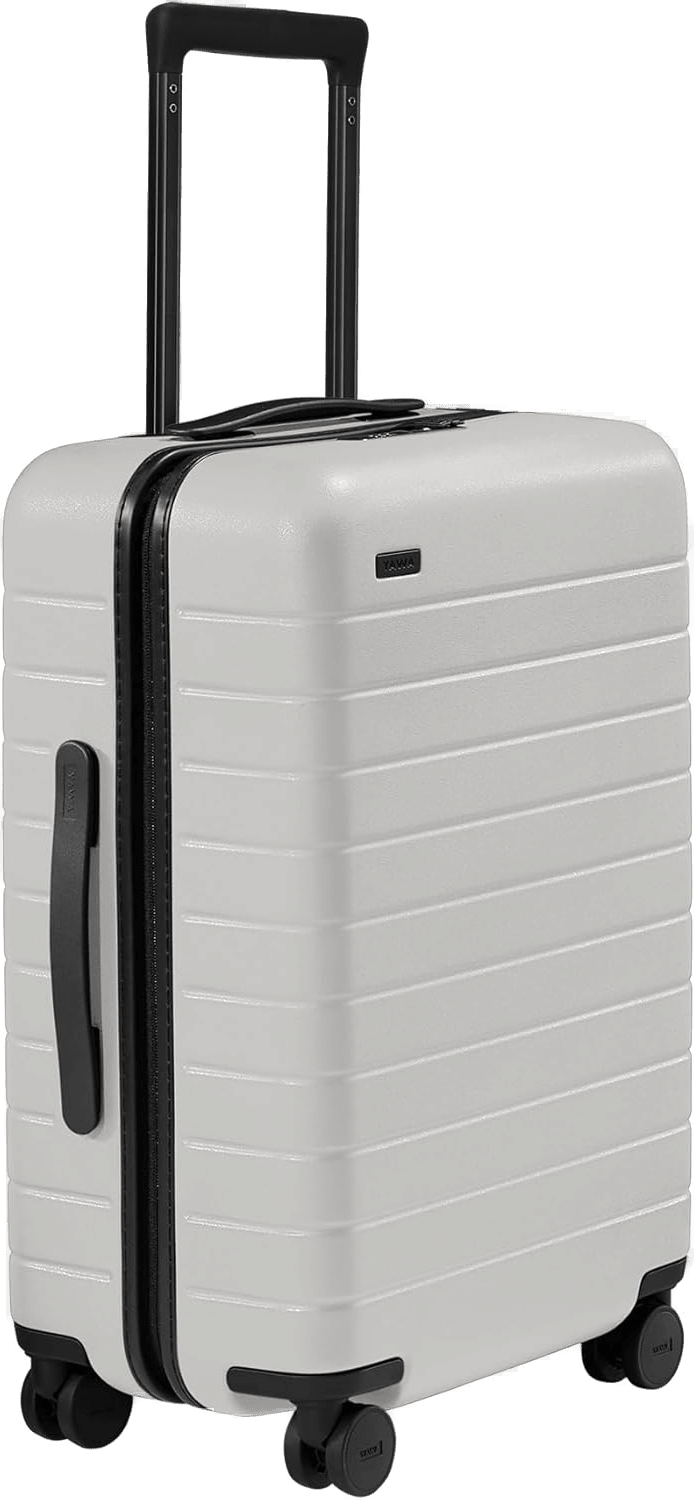
Away The Bigger Carry-On
Pros
- Flexible polycarbonate shell bounces back from compression
- Built-in ejectable phone battery
- Clean aesthetic and functional compression system
Cons
- Limited warranty — defects only, not damage
- Spinner wheels are exposed and break under heavy use
- Polycarbonate scratches visibly after first trip
Eagle Creek Tarmac XE — Best for Adventure Travel
Eagle Creek builds luggage for people whose travel includes dirt roads, hostels, and bus rooftops. The Tarmac XE is a hybrid design: hardshell bottom for structure, softshell top for flexibility and access.
The wheels are oversized and designed for uneven surfaces. The exterior uses recycled, weather-resistant fabric with reinforced corners. The "No Matter What" warranty covers functional damage for life, which puts it closer to Briggs & Riley territory than most brands.
The hybrid design means you can access the main compartment from the top without laying the bag flat. This matters when you're pulling clothes from a hostel bunk or a car trunk.
Honest downsides: The telescoping handle is the weak point. Multiple users report it failing to lock in the extended position after heavy use. The hybrid design means the top half is less structured than a full hardshell, so the bag can sag when overpacked. Heavier than pure softshell bags at a similar size.
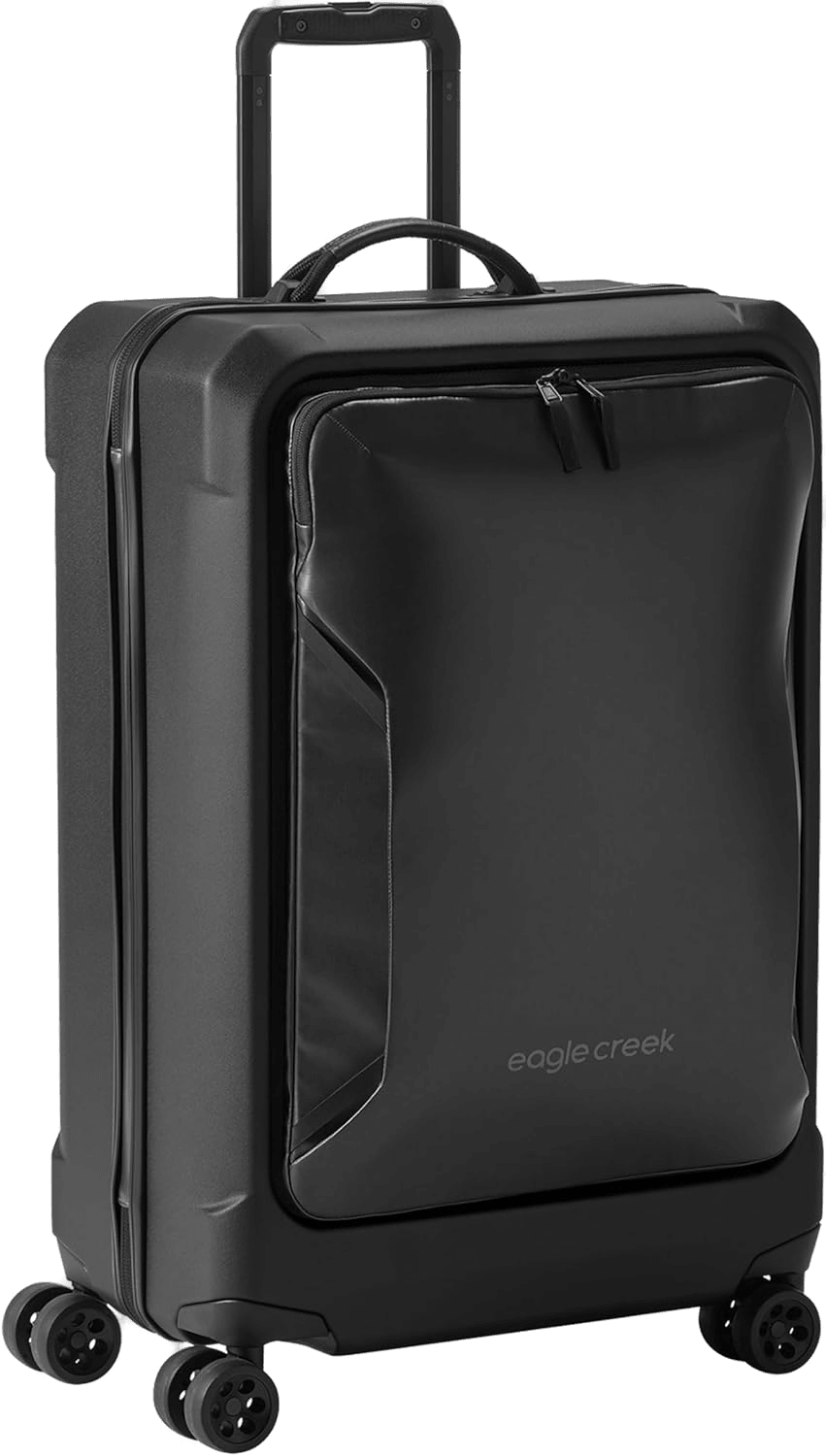
Eagle Creek Tarmac XE 2-Wheel Carry-On
Pros
- Oversized wheels handle cobblestones and rough terrain
- No Matter What warranty covers functional damage for life
- Hybrid design allows top-access without laying bag flat
Cons
- Telescoping handle can fail to lock under heavy use
- Top half sags when overpacked
- Heavier than pure softshell alternatives
How to Make Any Carry-On Last Longer
Protect the wheels. When checking a bag, angle it so the wheels face up. Most wheel damage happens on the conveyor belt. Packing cubes won't save your wheels.
Don't overpack. Zippers are the second most common failure point. An overstuffed bag puts constant stress on the zipper teeth. If you have to sit on your bag to close it, you've already shortened the zipper's life by a year.
Clean the wheels after trips. Hair, thread, and debris wrap around the axle and create friction that wears the bearings. A quick pick-out after each trip prevents this.
Which One to Buy
Buy the Briggs & Riley if you travel monthly and want one bag for the next decade. The warranty alone justifies the price for frequent travelers.
Buy the Travelpro if you want 80% of Briggs & Riley's durability at half the price. The go-to for regular business travelers who don't want to spend $700.
Buy the Away if you travel a few times a year, care about aesthetics, and don't need a bag that survives 200 trips. Good enough for casual use. Not built for the road warrior.
Buy the Eagle Creek if your travel involves rough terrain, adventure destinations, or anything beyond airports and hotels.
The common thread: every bag on this list has a warranty that covers real-world damage. If your current carry-on doesn't, you're paying full price every time a wheel breaks. Stop buying disposable luggage.