Our Picks
Levoit Vital 200S-P
Winix 5500-2
Levoit Core 600S
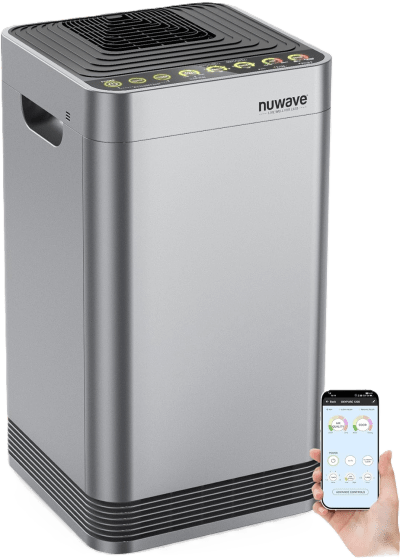
NuWave OxyPure Smart (Model 47005)
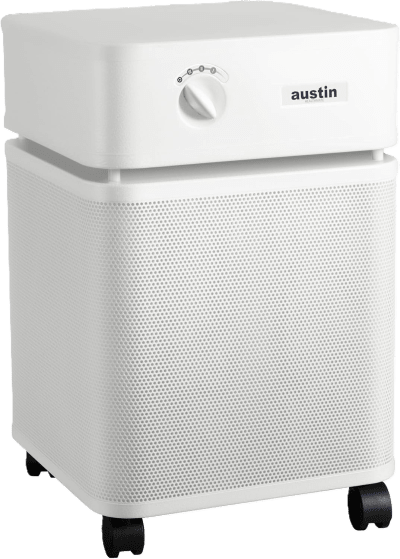
Austin Air HealthMate HM400
Introduction
Your dog shakes off after a walk, and a cloud of invisible dander launches into the air. Meanwhile, the fur tumbleweeds rolling across your hardwood floor just sit there, waiting to get kicked up again. These are two completely different problems, and most "best air purifier" lists pretend they're one and the same.
We tested air purifiers specifically for pet-heavy households--homes with shedding breeds, litter boxes, and that distinct "wet dog" smell that guests pretend not to notice. What we found is that no single machine handles everything. The purifier scrubs dander and odor molecules from the air you breathe. But the hair? That settles on your carpet and furniture, building up a reservoir that gets launched back into the air every time someone walks across the room. You need a vacuum for that.
So we picked our five top-rated models based on three things that actually matter for pet owners: how they handle physical hair without choking, how much activated carbon they carry for real odor control, and whether the filter design will bankrupt you within a year. And yes, we'll cover why a vacuum isn't optional--it's the other half of the equation.
Why You Need a Vacuum Too (The Part Nobody Tells You)
Most air purifier guides skip what follows: your carpet is the biggest allergen reservoir in the house. Pet dander and hair settle onto horizontal surfaces--carpets, couches, bedding--and just wait. Every time you walk through the room, sit on the couch, or your dog jumps off the bed, those particles get launched back into the air. Researchers call this "resuspension," and it completely overwhelms an air purifier that's trying to clean the same particles over and over.
An air purifier captures what's floating. A vacuum extracts what's settled. When you use both together, you break the cycle. The vacuum removes the source reservoir from your carpet and upholstery, drastically reducing the baseline load. The air purifier catches the fugitive particles that get stirred up during vacuuming and the ambient dander that floats all day.
If you only run an air purifier, you're fighting an endless loop. If you only vacuum, the mechanical action of the beater bar and exhaust temporarily spikes the airborne particle count. The real solution is both working in tandem: vacuum first, then crank the purifier to turbo for 20-30 minutes to sweep up the aftermath. We recommend a HEPA-sealed vacuum and vacuuming high-traffic pet areas at least twice a week.
What to Look for in a Pet Air Purifier
CADR: The number that actually matters
Clean Air Delivery Rate (CADR) tells you how much filtered air the purifier delivers, measured in cubic feet per minute. CADR is tested independently by AHAM for three particle types--smoke, dust, and pollen--and the smoke CADR is the most conservative and most commonly used benchmark. For pet homes, you want enough CADR to cycle the room's air 4-5 times per hour. A 300 sq ft room needs roughly 200+ CFM. An open-concept living area needs 350+ CFM. Anything less, and you're just gently waving at the dander.
True HEPA: Non-negotiable
True HEPA captures 99.97% of particles down to 0.3 microns. Pet dander particles can be smaller than 2.5 microns, and the allergenic proteins (Fel d 1 in cats, Can f 1 in dogs) ride on particles well under a micron. "HEPA-type" or "HEPA-style" filters don't meet this standard. Don't bother with them.
Carbon weight is everything for odor
HEPA filters cannot touch odors. Period. Odors are gases--ammonia from urine, amines from saliva, sulfur compounds from skin oil breakdown--and gas molecules pass right through HEPA media. You need activated carbon, and the amount matters enormously. A thin carbon-impregnated mesh pad (the kind in most sub-$100 purifiers) saturates within weeks in a pet home. Pelleted activated carbon, ideally measured in ounces or pounds, provides the mass and surface area needed for sustained VOC adsorption. This is the single biggest differentiator between a purifier that "sort of" handles pet smell and one that works.
Pre-filter design: Will it survive your Golden Retriever?
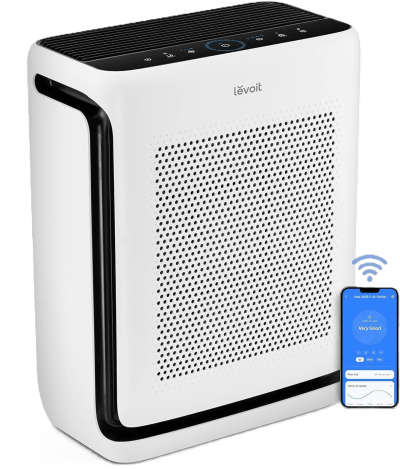
Pet hair destroys air purifiers. Most cylindrical intake purifiers pull fur directly into the HEPA media, blinding it and cutting its lifespan in half. Look for models with a separate, washable pre-filter that traps macroscopic hair before it reaches the expensive HEPA filter. The best designs (like the Levoit Vital 200S-P's U-shaped intake) are specifically engineered to prevent hair accumulation at the intake.
Levoit Vital 200S-P - The Hair-Storm Household
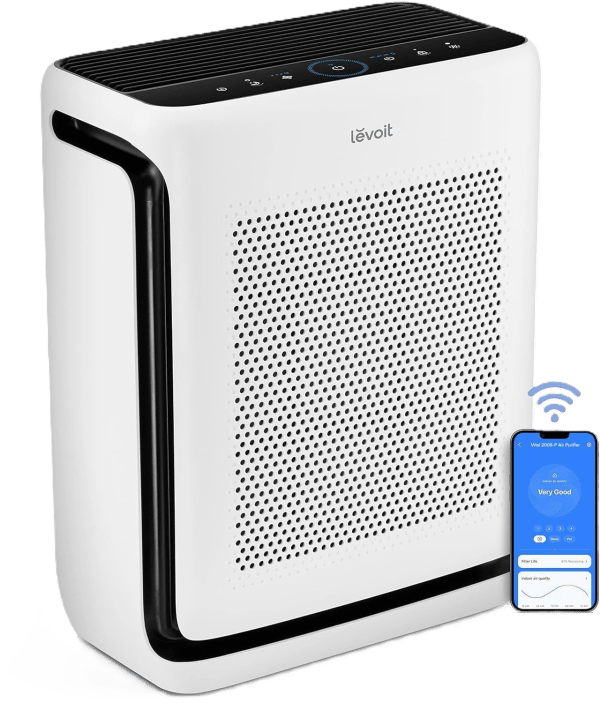
Levoit Vital 200S-P
Pros
- U-shaped front intake prevents pet hair clogs that kill most purifiers
- Washable, detachable nylon pre-filter catches fur before the HEPA
- 24 dB sleep mode (manufacturer spec) is quiet enough for nighttime bedroom use
- VeSync app with scheduling, air quality monitoring, and dedicated Pet Mode
Cons
- Carbon weight is undisclosed by Levoit, limiting odor-removal transparency
- ~250 CFM (smoke) CADR means it struggles in rooms over 400 sq ft
- Not ideal for severe pet odors from litter boxes or large breeds
Specifications
Intake Design: Purpose-built for heavy shedding
Most air purifiers in pet homes die the same death: matted pet hair slowly chokes the intake, suffocates the HEPA filter, and cuts its effective lifespan in half. The Levoit Vital 200S-P was engineered to prevent exactly that. Its front-facing U-shaped air inlet spreads the intake surface area wide, preventing the dense hair clogs that plague traditional cylindrical designs. A detachable, washable nylon pre-filter sits in front of the HEPA, catching macroscopic fur before it ever touches the delicate filter media.
Specs and Costs: Affordable, quiet, and efficient
AHAM-verified CADR ratings of 250 CFM (smoke), 254 CFM (dust), and 289 CFM (pollen) put the Vital 200S-P in a solid performance tier for rooms up to about 380 square feet at 4.8 air changes per hour. It runs a 3-stage True HEPA filter with Levoit's ARC Formula pelleted activated carbon for odor. Levoit doesn't publicly disclose the exact carbon weight for this model, which is a minor transparency miss, but the pelleted format does outperform the thin mesh pads found in budget competitors. At ~$50/year for replacement filters and a manufacturer-specified 24 dB sleep mode, the economics and noise profile are hard to beat for a daily-use machine.

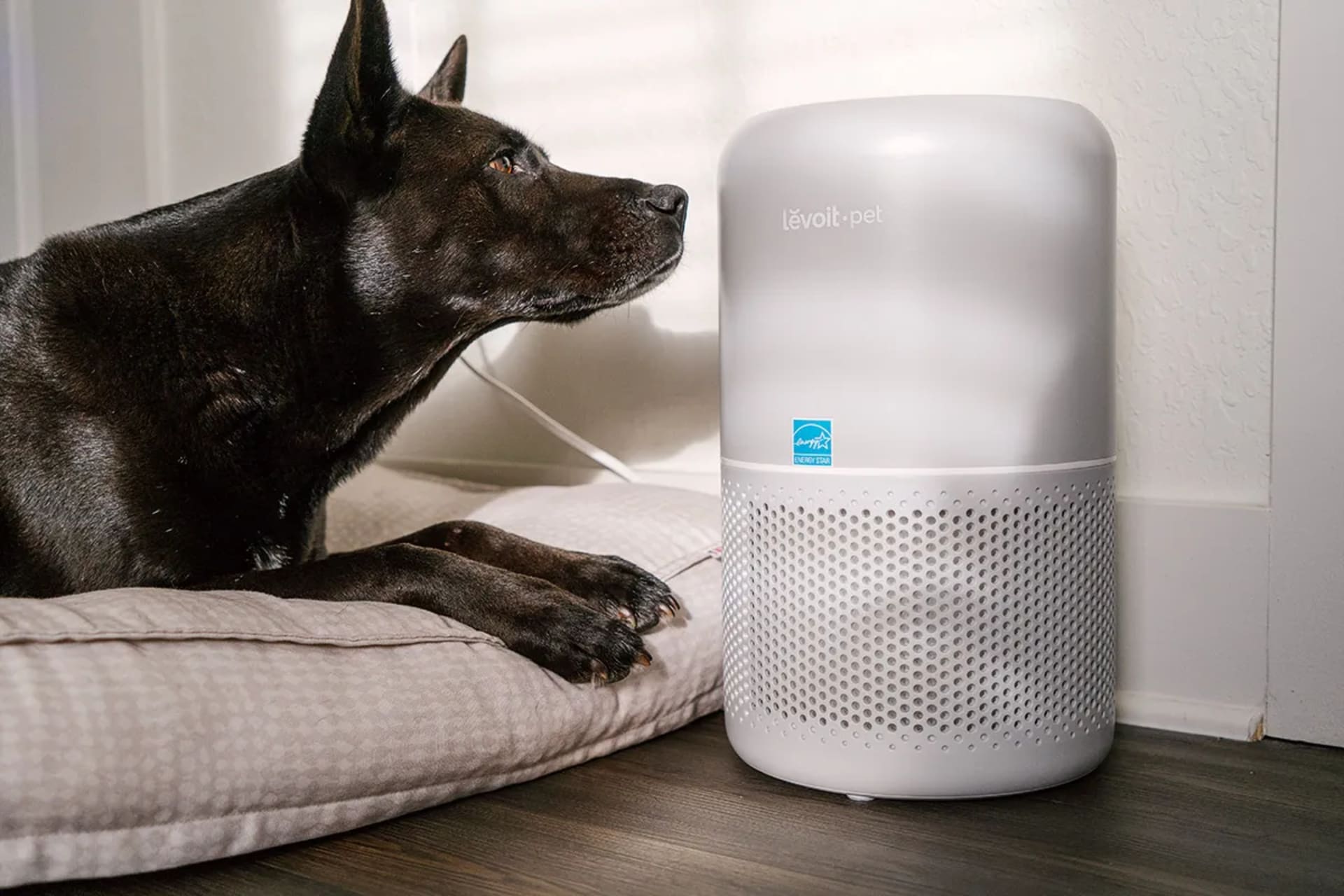
Levoit Vital 200S-P in a pet home — front intake view
Winix 5500-2 - The Allergy Assassin
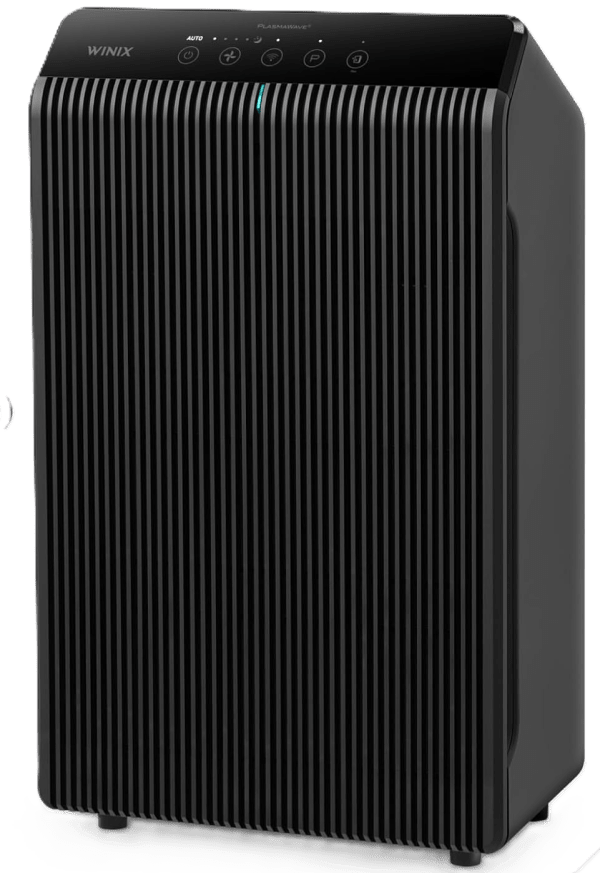
Winix 5500-2
Pros
- Washable AOC pelleted carbon filter genuinely handles pet odors
- PlasmaWave ionizer neutralizes biological markers in dander
- Smart auto-mode ramps up when cats kick litter or dogs shake
- Filter replacement support confirmed through 2032
Cons
- Discontinued in the US (May 2025)--remaining stock only, replaced by Winix 5510
- No Wi-Fi or app control (auto mode only)
- PlasmaWave produces trace ozone, though well below the 0.05 ppm safety limit
Specifications
Filtration Strategy: Dual HEPA and PlasmaWave protection
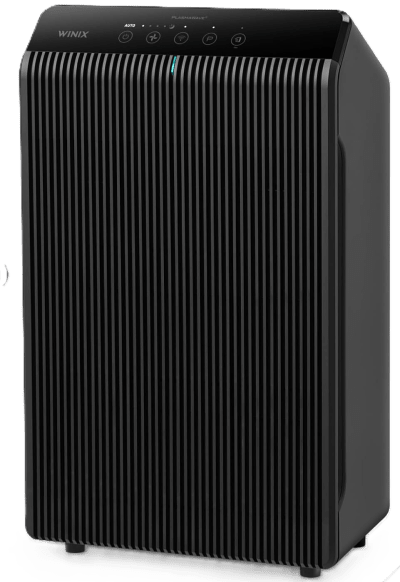
The Winix 5500-2 has been an air-quality workhorse for years, and it earned the "Allergy Assassin" label through consistent, no-drama dander reduction. Its True HEPA filter handles 99.97% of particles at 0.3 microns, while the proprietary PlasmaWave ionizer adds an electrical charge to aerosols, inducing clumping and neutralizing biological markers in pet dander. PlasmaWave can be toggled off if you're concerned about ozone, though independent testing confirms it operates well below the 0.05 ppm safety threshold.
Odor Control: Solid carbon pellets vs. fabric sheets
Where the 5500-2 separates from cheaper competitors is the washable Advanced Odor Control (AOC) carbon filter. Unlike the older Winix 5300-2 it replaced, the 5500-2 uses granular activated carbon pellets rather than an impregnated fabric sheet--a meaningful mass difference for soaking up urine and wet-dog smells. The AHAM-verified CADR for the 5500-2 is 232 CFM (smoke), 243 CFM (dust), and 246 CFM (pollen), covering rooms up to 360 sq ft. The smart auto-sensor ramps fan speed when it detects spikes--cats kicking litter, dogs shaking off after a walk--without any manual intervention.
Availability: Discontinued but still well-supported
One note: the Winix 5500-2 was officially discontinued in the US and Canada in May 2025 and replaced by the Winix 5510, which adds Wi-Fi and app control. Winix has confirmed it will continue producing replacement filters for the 5500-2 through at least 2032. If you can find remaining stock at a discount, it remains an excellent value. If not, the 5510 carries the same core filtration with a slightly higher CADR and modern connectivity.
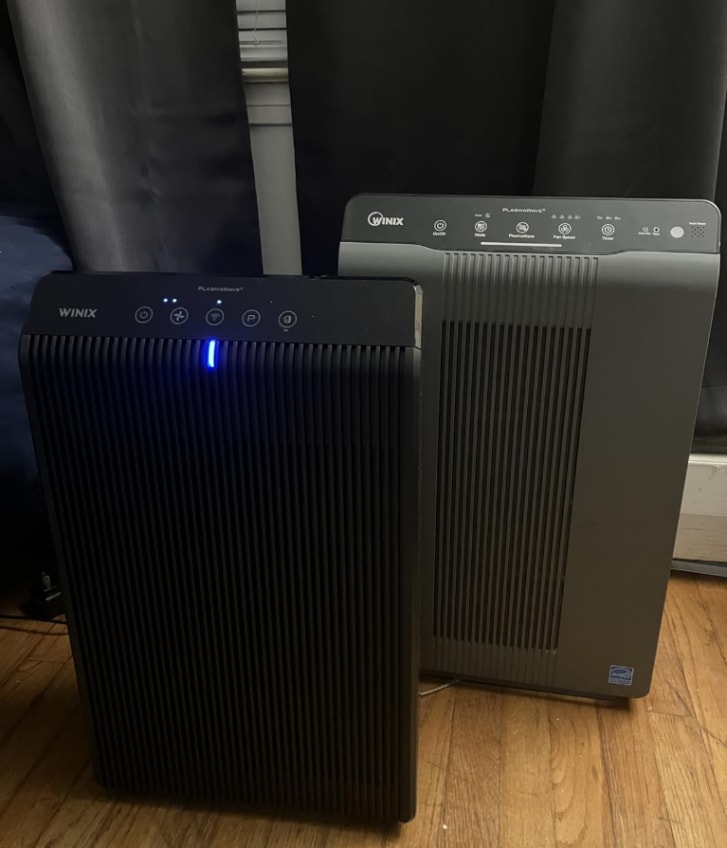
Winix 5500-2 (right) next to the newer Winix 5510 — size and design comparison
Levoit Core 600S - The Open-Floor Powerhouse
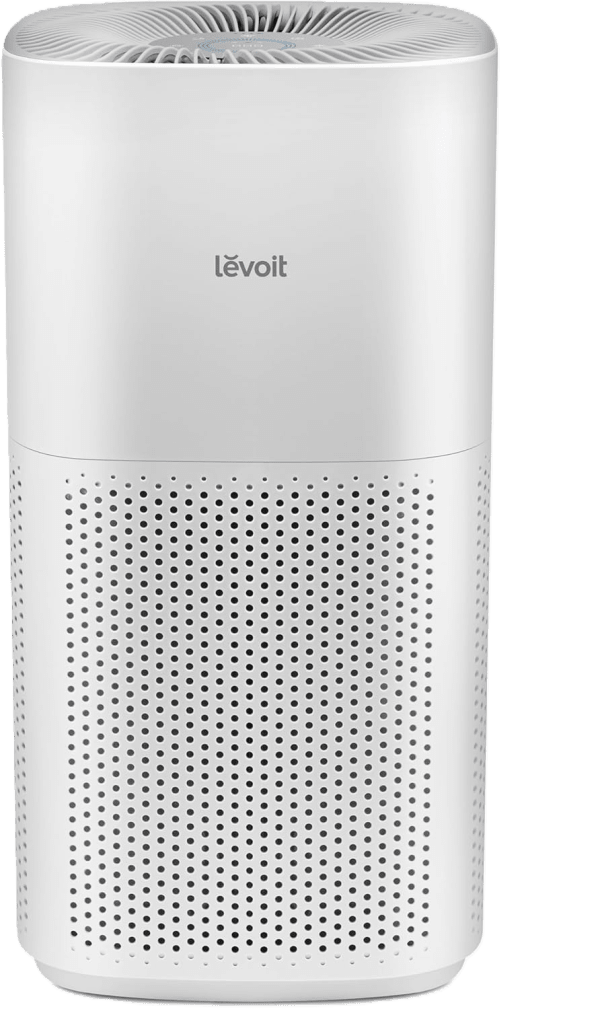
Levoit Core 600S
Pros
- 410 CFM CADR moves enormous volumes of air for its price
- AirSight Plus laser sensor provides accurate PM2.5 monitoring
- Specialized 'Pet Allergy' replacement filter bumps carbon to 360g
- Covers up to 635 sq ft at 5 ACH--ideal for open-concept layouts
Cons
- Bonded filter design means HEPA and carbon must be replaced together
- Standard filter only contains ~160g of carbon, inadequate for severe odors
- Gets loud on turbo: independently measured up to 68 dBA
Specifications
Airflow Volume: Raw power for open floor plans
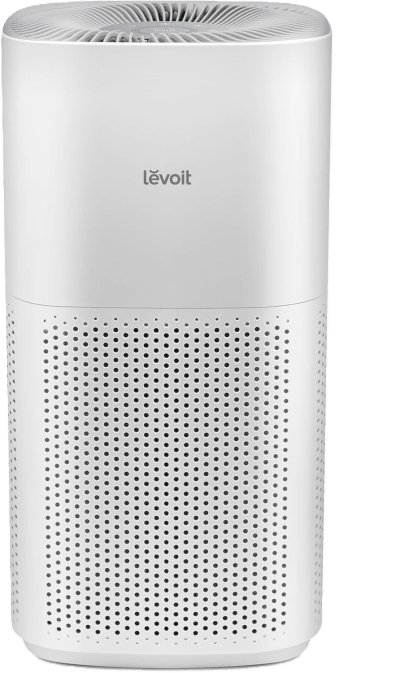
If you've got a sprawling open-concept floor plan and multiple shedding animals, the math gets simple: you need raw volumetric airflow. The Levoit Core 600S delivers 410 CFM CADR, covering up to 635 square feet at 5 air changes per hour. That's enough to scrub the air in a large living room, kitchen, and dining area combination without dropping below effective exchange rates.
Sensors and Smarts: Precision monitoring and pet upgrades
The AirSight Plus laser sensor monitors PM2.5 levels in real-time and feeds the data to the VeSync app, giving you actual numbers instead of vague color-coded lights. The standard filter contains roughly 160g of ARC Formula carbon, which is adequate for general pet smells. For households dealing with persistent litter box or multi-dog odor, Levoit sells a specialized "Pet Allergy" replacement filter that bumps the carbon to 360g of pelletized media--a worthwhile upgrade. One important caveat: Levoit removed the "True HEPA" designation from the Core 600S in 2023 following a challenge by a competitor upheld by the Better Business Bureau. The filter achieves HEPA-grade performance in Sleep Mode per independent lab testing, but it is not officially classified as True HEPA at all speeds.
Maintenance Trap: The drawback of fused filters
The trade-off is the bonded filter design. The HEPA and carbon layers are fused into a single cylindrical unit. If the carbon saturates with pet odors before the HEPA clogs with particulates, you're forced to replace the entire filter. At roughly $60 per filter and a recommended change every 6 months in heavy-use pet homes, that adds up to about $120/year. Still, for the sheer volume of air it moves at this price point, nothing else comes close.
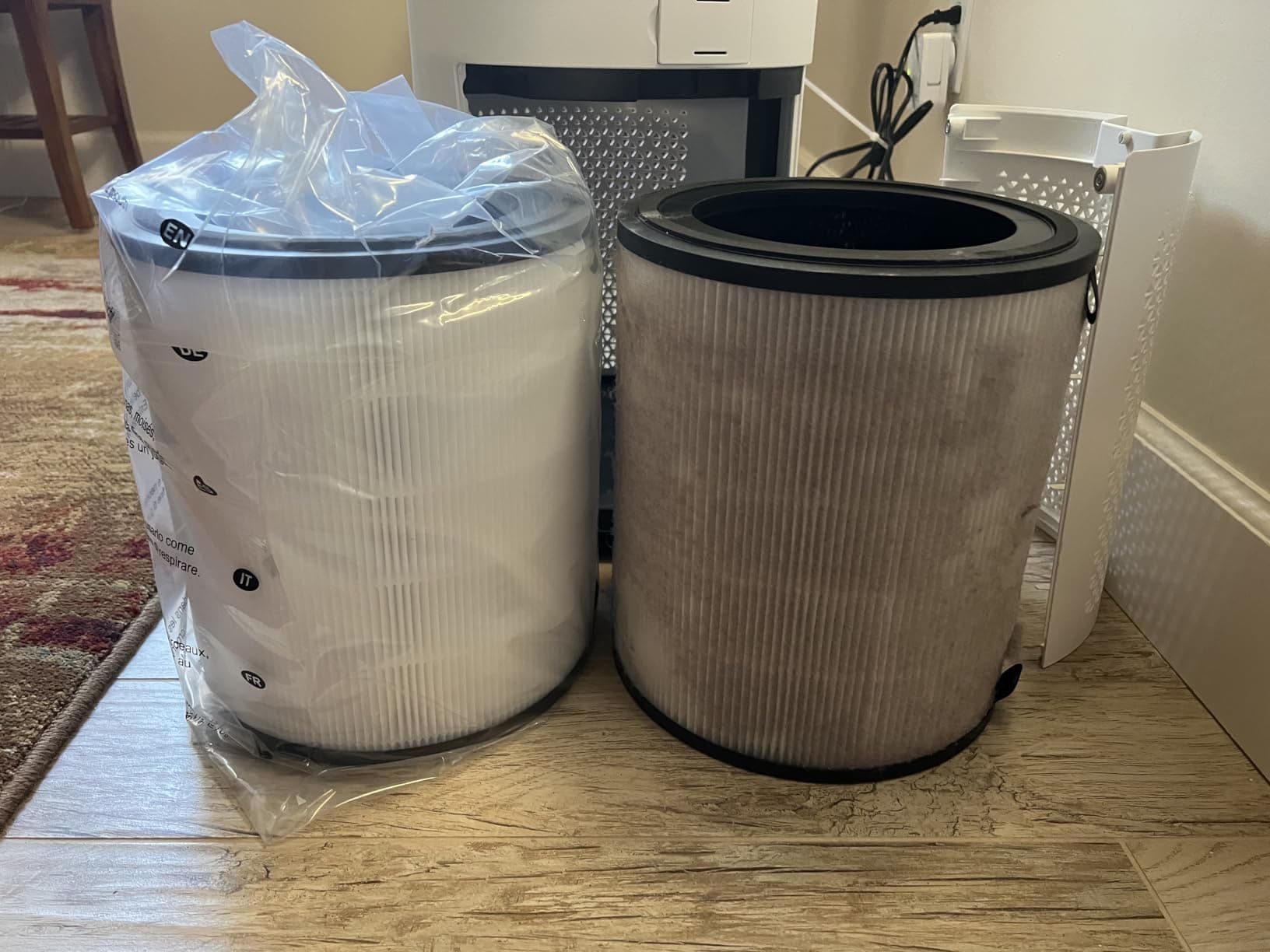
Levoit Core 600S in use — filter comparison
NuWave OxyPure Smart - The Zero-Filter-Cost Powerhouse
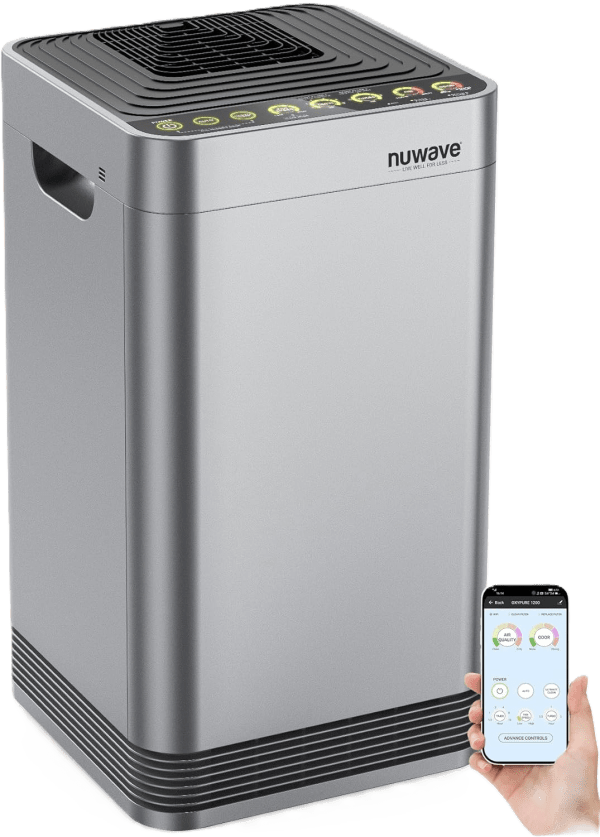
NuWave OxyPure Smart (Model 47005)
Pros
- Coverage: cleans 2,934 sq ft in 60 minutes or 586 sq ft in 12 minutes (manufacturer-claimed CADR: 664.6 m3/h; pollen CADR 391 CFM / smoke CADR 356 CFM per Intertek)
- Includes 5 years of filters in the box (1 pre-installed + 4 extra HEPA/Carbon combo filters)
- Washable Stainless Steel Pre-filter and Bio-Guard electrostatic filter are reusable for up to 20 years, slashing long-term costs
- Smart Wi-Fi controls (NuWave Connect app) and dual sensors that detect both general air quality and pet odors
Cons
- Higher upfront cost of $599.99 compared to single-room models
- Recurring user complaints about units failing to power on after washing reusable filters--meticulous drying is mandatory
- Requires regular cleaning of washable filters; Ozone Emission Removal Filter must only be vacuumed (not washed)
- Heavy physical footprint (26 lbs) and draws up to 128W of power on high
Specifications
Filter Economics: Five years of zero upkeep costs
The NuWave OxyPure model 47005 tackles the long-term cost of air purification head-on. While its upfront price of $599.99 (discounted from $699.99) is high, it completely bypasses the replacement filter treadmill for the first five years. NuWave bundles 1 pre-installed and 4 extra HEPA/Carbon combo filters in the box--one filter per year for five years, with zero additional cost. Furthermore, two of its primary stages--the stainless steel pre-filter and the Bio-Guard electrostatic filter--are washable and designed to last up to 20 years. (Note: the Ozone Emission Removal filter should only be vacuumed, not submerged; washing it is not recommended.)
Pet Performance: Heavy-duty hair capture and automatic sensing
For multi-pet households, the performance is strong. Intertek-certified CADR testing shows 356 CFM for smoke and 391 CFM for pollen, covering up to 2,934 sq ft in 60 minutes or 586 sq ft in 12 minutes. The washable stainless steel pre-filter acts as a high-capacity collector that traps flying pet hair without clogging the internal filters, while the Bio-Guard electrostatic filter captures fine dander particles down to 0.09 microns. Its dual sensors (monitoring both general particles and gaseous pet odors) automatically kick the fan into high speed when pet odors spike, and sleep mode runs at a quiet 31.4 dBA.
The Catch: Cleaning maintenance and reliability concerns
The trade-offs are operational and mechanical. The reusable filters must be washed regularly and--critically--dried completely before reinstalling. Skipping this causes airflow restriction and performance degradation. More seriously, there are recurring complaints from users about units failing to power on or displaying persistent error codes after the filters have been washed and reinstalled; this is a documented pattern across user forums and customer support channels. It's also a heavy machine at 26 lbs, drawing up to 128W of power on high. But if you are willing to commit to the maintenance routine, the five-year zero upkeep cost makes it an economical choice for large homes with shedding animals.
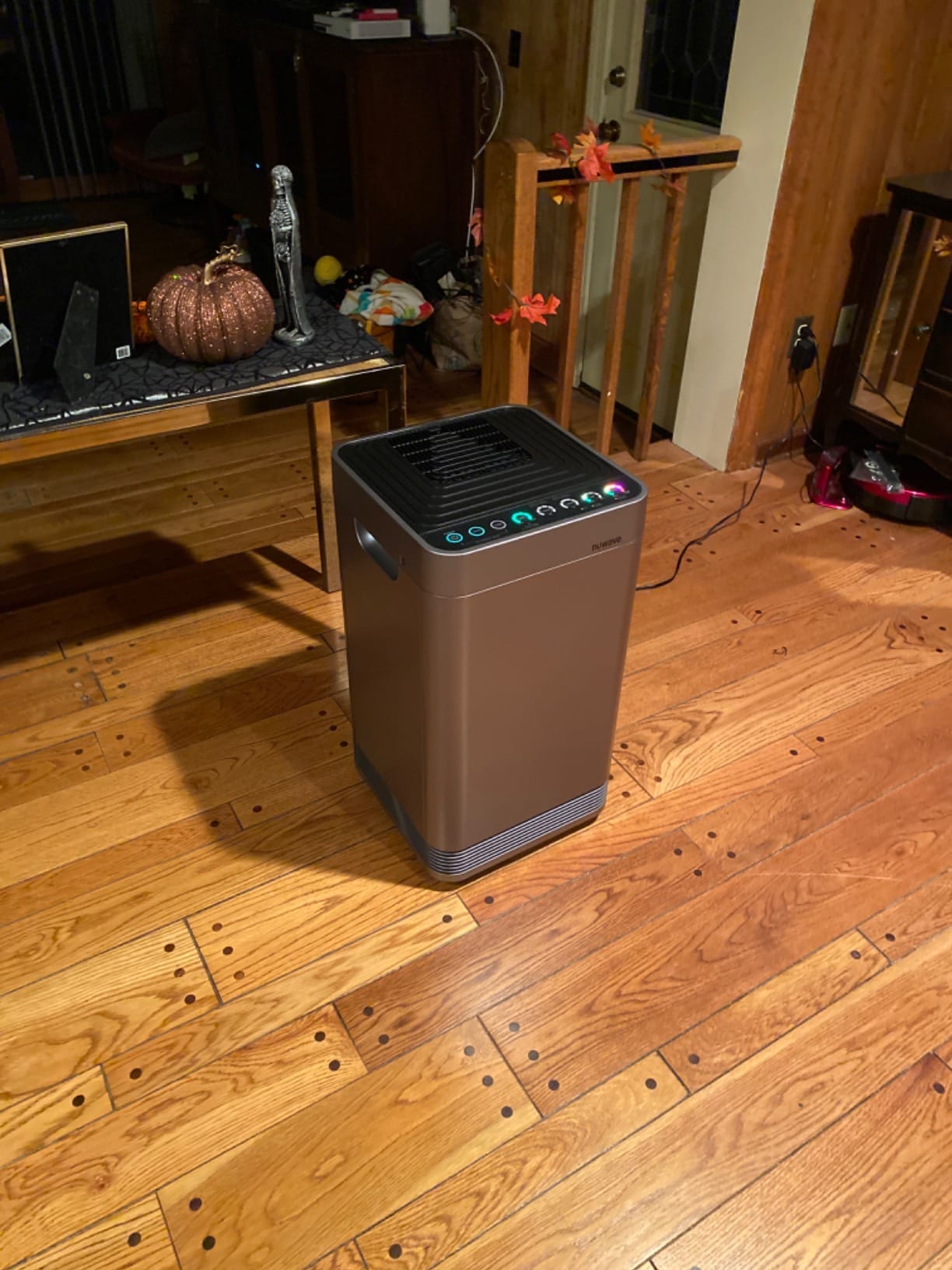
NuWave OxyPure Smart — real-world placement photo
Austin Air HealthMate HM400 - The Industrial Odor Killer
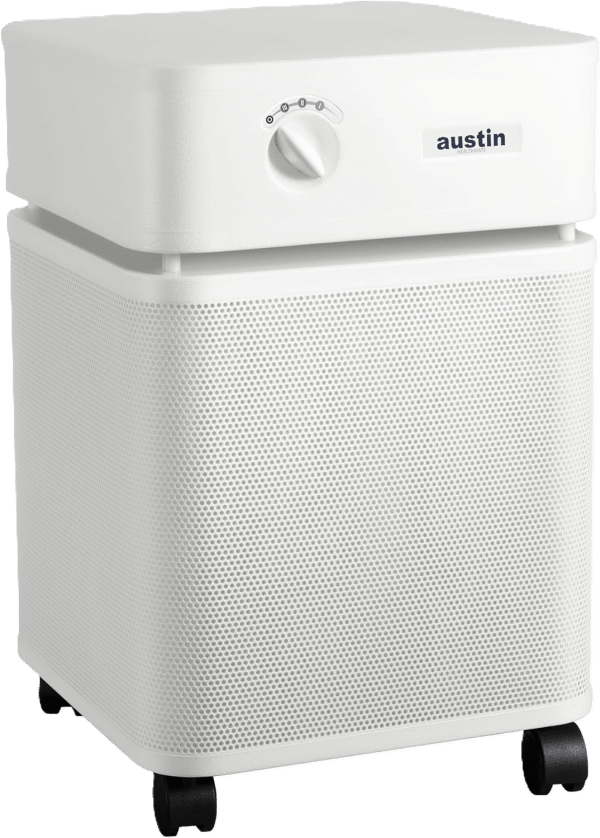
Austin Air HealthMate HM400
Pros
- 15 lbs of granular activated carbon and zeolite, the most carbon in any residential purifier on this list
- 60 sq ft of medical-grade True HEPA media
- All-steel construction (23-gauge), zero plastic off-gassing, built in Buffalo, NY, USA
- Filter lasts up to 5 years (FR400 replacement: ~$315), amortizing to roughly $63/year
Cons
- Loud: 50-66 dBA, comparable to a running window AC unit
- No smart features, no app, no auto mode--just a manual 3-speed dial
- At $845, the upfront cost is 4-5x most consumer models
- Heavy at 47 lbs and not easily portable
Specifications
Design Philosophy: An uncompromised box of steel
When the Reddit community at r/AirPurifiers gets asked about severe pet odor--the kind where a house smells like a shelter and consumer-grade purifiers have already failed--one name comes up over and over: the Austin Air HealthMate HM400. It's not subtle, it's not pretty, and it has zero smart features. It is a 23-gauge steel box with a manual 3-speed dial and the single largest carbon filter you can put in a residential setting.
Odor Adsorption: 100x the carbon of standard purifiers
Fifteen pounds of granular activated carbon and zeolite. That number deserves its own sentence because it's roughly 100x the carbon found in a standard Levoit filter. This mass of carbon doesn't just mask ammonia spikes from cat urine or wet-fur VOCs, it permanently adsorbs and locks them away. Paired with 60 square feet of medical-grade True HEPA media, the HM400 handles both the particle and gas phases of pet pollution simultaneously.
The Trade-offs: Loud, heavy, and USA-built
The unit is built from 23-gauge steel in Buffalo, New York, which means zero plastic off-gassing. The filter (FR400 replacement, ~$315) lasts up to 5 years under normal residential use, putting the amortized annual cost at roughly $63. The trade-offs are real: it's loud (50-66 dBA, comparable to a window AC unit), weighs 47 lbs, and costs $845 upfront. There is no app, no auto mode, no air quality sensor. You plug it in, turn the dial, and it runs. For households where pet odor is the primary quality-of-life issue, this is the brute-force solution that works.
The Bottom Line
For homes dealing primarily with pet hair from heavy shedders, the Levoit Vital 200S-P is the daily driver, with its U-shaped intake and washable pre-filter designed for exactly this problem. If pet allergies are the main concern and you want reliable dander reduction with decent odor control, the Winix 5500-2 (or its current successor, the Winix 5510) remains the proven workhorse. For large open-concept homes with multiple pets, the Levoit Core 600S moves the most air for the money, though be aware it is no longer marketed as True HEPA. If you want to minimize filter costs in a large home and don't mind a strict maintenance schedule, the NuWave OxyPure (Model 47005) ships with 5 years of replacement filters in the box and two washable stages that last 20 years. And if your home has a genuine, severe odor problem that nothing else has fixed, the Austin Air HealthMate HM400 and its 15 lbs of carbon is the only residential machine built for that job.
Whichever purifier you pick, remember: an air purifier without a vacuum is fighting a losing war. The purifier handles what floats. The vacuum handles what settles. Run both consistently, and you'll notice the difference within a week.
Product Comparison at a Glance
| Product | Brand | CADR (CFM) | Coverage | Carbon Type | Annual Filter Cost | Best For | Action |
|---|---|---|---|---|---|---|---|
#1Levoit Vital 200S-P | Levoit | 250 (smoke) | 380 sq ft | Pellets (ARC Formula) | ~$50 | Heavy Shedders | |
#2Winix 5500-2 | Winix | 232 (smoke) | 360 sq ft | Pelleted AOC Carbon (washable) | ~$50-$75 | Allergy Sufferers | |
#3Levoit Core 600S | Levoit | 410 | 635 sq ft | Pellets (160g std / 360g Pet Allergy upgrade) | ~$120 | Large Open Rooms | |
#4NuWave OxyPure Smart (Model 47005) | NuWave | 356 (smoke) / 391 (pollen) | 2,934 sq ft | Bio-Guard ESP + Active Carbon | $0 (first 5 years) | Zero Filter Cost & Large Homes | |
#5Austin Air HealthMate HM400 | Austin Air | ~400 | Up to 1,500 sq ft | 15 lbs Granular Carbon + Zeolite | ~$63 (amortized over 5 yrs) | Severe Odor Problems |