
Our Picks
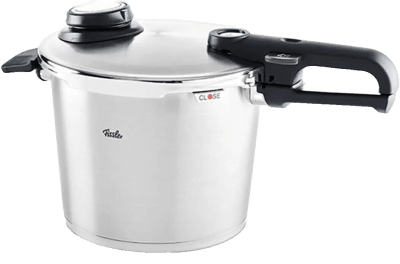
Fissler Vitavit Premium (6.4-Qt Stovetop)
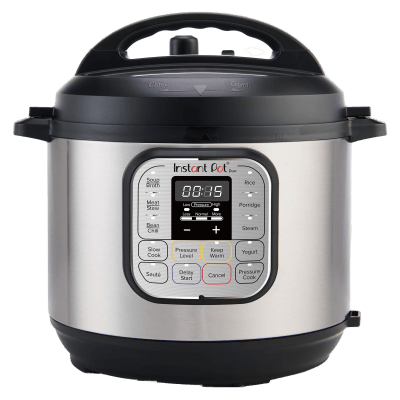
Instant Pot Duo 7-in-1 (6-Qt)
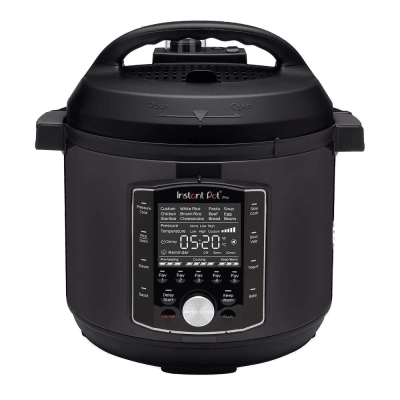
Instant Pot Pro (6-Qt)

Breville Fast Slow Pro (6-Qt)
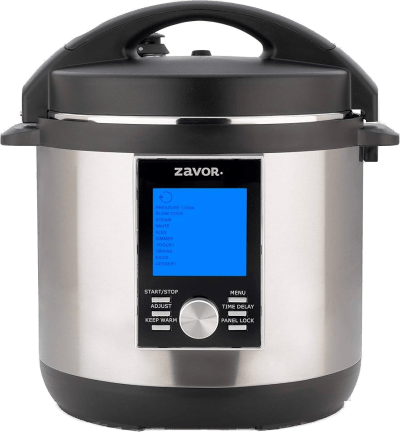
Zavor LUX LCD Multi-Cooker (6-Qt)
Why Electric Pressure Cookers are Not True BIFL
Here is the hard truth about electric pressure cookers: they are not buy-it-for-life appliances. No matter how premium the brand, any machine with a circuit board, a digital screen, and microprocessors will eventually fail when subjected to repeated high-heat and steam cycles. Thermal stress degrades the internal capacitors and sensors over time, giving even the best electric models a typical functional lifespan of 2 to 9 years.
If you want a pressure cooker that will last thirty years or more, you need a traditional stovetop model. Constructed from thick stainless steel with zero electronic components, stovetop cookers rely on simple mechanical valves and replaceable silicone gaskets. They are built to last decades.
However, many households prefer the automatic convenience of electric cooking. If you choose to go electric, your real metric for longevity is repairability and spare parts availability. When a small valve cracks or a gasket leaks, a machine is only as good as the spare parts you can actually buy.
This guide ranks the most popular pressure cookers on the market based on construction quality, real-world owner longevity, and the availability of replacement parts.
Key Longevity Metrics: What Actually Matters
Spare Parts Access is the Real Longevity Metric
Silicon gaskets, float valves, and sealing rings are consumable items that naturally stretch, degrade, and absorb odors over time. You will need to replace them every 12 to 18 months. Before buying any cooker, verify that the manufacturer (or reliable third-party brands) actively stocks replacement parts. If a company goes out of business or locks parts behind a customer-service wall, the appliance becomes e-waste the moment a single silicone ring fails.
Operating Pressure Defines Cooking Speed
Stovetop pressure cookers reach the industry standard of 15 PSI (pounds per square inch). This higher pressure raises the internal boiling point to 250°F (121°C), cooking food approximately 25% faster than electric models. Most electric pressure cookers max out at 10 to 12 PSI, meaning they run cooler and cook slower.
Bare Stainless Steel Pots Beat Non-Stick Coatings
Always choose a cooker with a bare stainless steel inner pot. Ceramic or PTFE non-stick coatings are highly fragile. They scratch easily from metal spoons or bone-in meats, and the coating naturally degrades after a few years of washing, forcing you to replace the entire pot. Bare 18/8 or 18/10 stainless steel is practically indestructible.
Mechanical Simplicity Reduces Failure Points
Complex automated steam-release motors, color-changing LCD screens, and multiple built-in sensors add convenience but create more electronic components that can short-circuit or degrade under high steam exposure. The simpler the interface, the longer the base unit will last.
Fissler Vitavit Premium is the ultimate stovetop pick
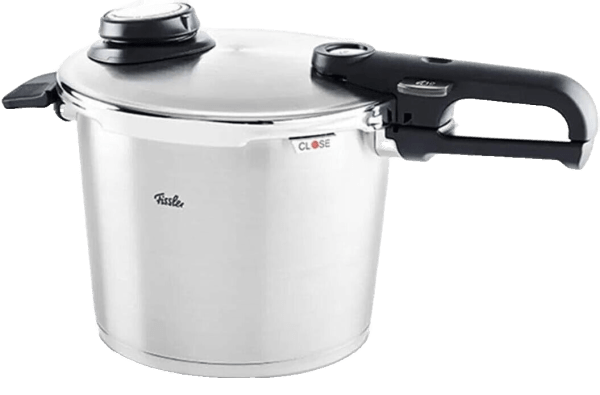
Fissler Vitavit Premium (6.4-Qt Stovetop)
Pros
- Indestructible German 18/10 stainless steel construction with 15-year warranty
- Four cooking settings: pressure-free steam plus three pressure levels (up to 15 PSI)
- Interactive traffic light indicator ring actively monitors pressure phases
- Encapsulated Cookstar base maintains flatness and optimal induction heat transfer
- Waffled Novogrill inner surface enables healthy searing and stick-free meat browning
Cons
- No electronic automation; requires active stovetop burner heat management
If your primary goal is buying a kitchen tool that will last decades, the Fissler Vitavit Premium is the absolute gold standard. Manufactured in Germany from high-grade 18/10 stainless steel (using up to 90% recycled material), this mechanical cooker contains zero logic boards, zero heating elements, and zero digital displays. It is built to outlast every electronic multi-cooker by decades and is backed by a 15-year warranty on all stainless steel parts.
The main upgrade over standard stovetop models is the adjustable cooking crown, which offers four distinct modes. You can choose a pressureless steam setting (acting like a high-end conventional pot) or select one of three precise pressure levels. Level 1 (Gentle) runs at 5.8 PSI (110°C) for delicate foods like fish and broccoli. Level 2 (Speed) cooks at 10.15 PSI (113°C) for grains and hard vegetables. Level 3 (Express) reaches a full 14.5–15.0 PSI (120°C), reducing cooking times by roughly 25% compared to electric models.
Monitoring pressure is simple thanks to the traffic light indicator ring built into the cooking crown. As the pot heats up, a yellow ring appears to signal that pressure is building and you can lower your stove heat. A green ring shows the selected cooking level has been reached and the cooking countdown should begin. A red ring warns that the temperature is too high, prompting the cooker to automatically vent steam to restore balance.
The interior base features Fissler's signature waffled Novogrill searing surface. This textured stainless steel bottom allows you to sear and brown meats with very little oil, creating a grill-like texture before locking the lid to pressure cook. Underneath, the thick, encapsulated Cookstar base distributes heat perfectly and remains completely flat under extreme heat, preventing hotspots on induction, gas, or electric cooktops.
Safety features are entirely mechanical and highly secure. A positioning aid on the lid makes alignment effortless, and a locking indicator on the handle turns green and clicks audibly to confirm the lid is pressurized safely. The loop handle also features a smooth depressurizing button for controlled steam release.
Maintenance is straightforward. The silicone sealing ring, the internal lid seal, and the valve gasket are the only wearable parts, and they can be swapped out in seconds. Fissler stocks spare parts for every component, including handles, screws, and valves, ensuring you can keep this cooker in active service for decades.
Instant Pot Duo 7-in-1 — The Best Electric Compromise
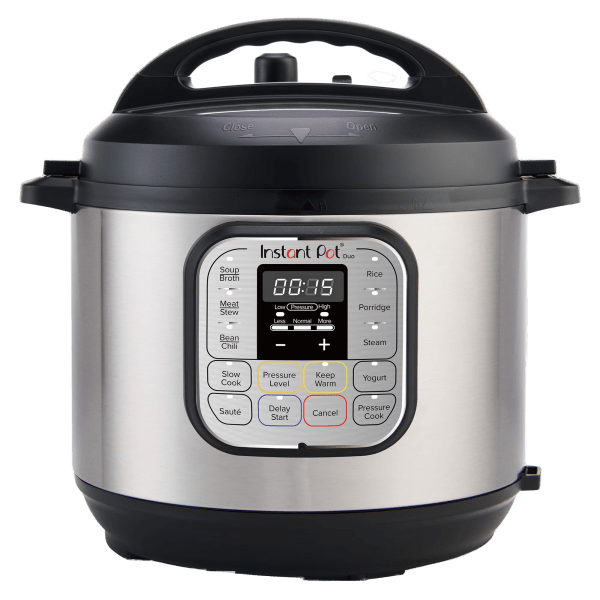
Instant Pot Duo 7-in-1 (6-Qt)
Pros
- Highly durable food-grade 18/8 stainless steel pot
- Universal spare parts ecosystem (valves, gaskets, power cords sold everywhere)
- Tactile buttons and basic interface reduce screen failures
- Affordable entry price compared to premium models
Cons
- Electronic components will eventually fail under high heat
- Operating pressure is capped at 11.6 PSI
The Instant Pot Duo is the most popular electric pressure cooker in the world, and it represents the most sensible compromise between modern convenience and BIFL durability. While the electronic base will eventually fail after 4 to 7 years of regular use, the Duo offers a massive advantage: a universal parts ecosystem.
Because Instant Pot has a massive install base, replacement parts are everywhere. You can easily buy sealing rings, float valves, steam handles, power cords, and bare stainless steel inner pots from the manufacturer or dozens of third-party sellers on Amazon at very low costs. This easy access to parts means a small component failure will never force you to throw the machine away.
The inner pot is made from bare 18/8 stainless steel with a tri-ply bottom, making it highly durable and dishwasher safe. The interface uses simple physical buttons and a basic LED display rather than a fragile touchscreen, reducing electronic failure points.
Common failures are well-documented and often fixable. A blown thermal fuse (designed to cut power if the unit overheats) can be replaced by users comfortable with basic electronics. Moisture-driven sensor desync (C6H or C6L error codes) sometimes resolves after letting the base dry for 72 hours.
Instant Pot Pro — Upgrades Bound by Parts Bottlenecks
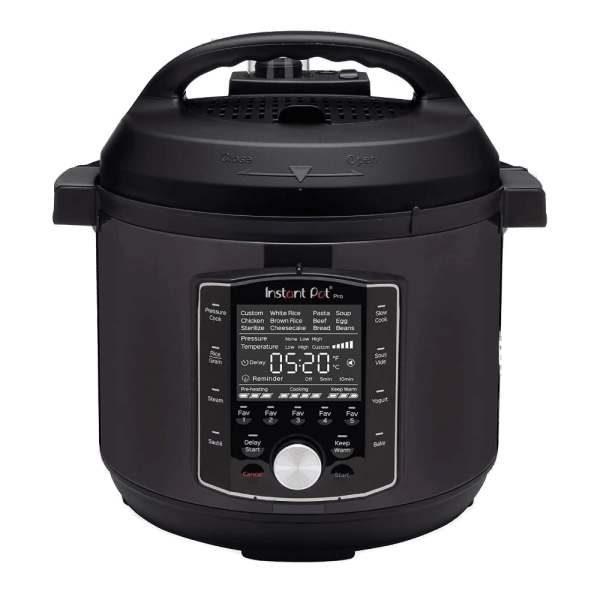
Instant Pot Pro (6-Qt)
Pros
- 1200W heating element reduces pre-heating times by 20%
- Stove-top and oven safe flat-bottomed inner pot with handles
- Upgraded gentle steam release switch covered by a diffusing cap
Cons
- Proprietary metal valve cap is easily lost and constantly out of stock
- Redesigned pressure switch is prone to desync and steam leaks
- Long-term customer support concerns due to corporate bankruptcy
The Instant Pot Pro was introduced as a high-end upgrade to the Duo, featuring a 1200W heating element that speeds up pre-heating times, a quieter steam release switch, and a flat-bottomed inner pot with silicone-wrapped handles that prevent it from spinning. While these are excellent upgrades for daily use, the Pro suffers from severe long-term maintenance bottlenecks.
The primary durability issue is the redesigned steam release valve. The Pro uses a heavy metal cap that sits over the steam pipe, covered by a plastic diffusing shield. Owners frequently report losing this small internal metal valve cap during routine washing. Because the cap is a proprietary design, the cooker cannot seal or build pressure without it.
Worse, Instant Brands does not consistently stock replacement valve caps for the Pro. When users lose this piece, they often find it out of stock on the official website, forcing them to search for overpriced third-party parts on eBay or buy an entire new lid.
The Pro also suffers from a unique sensor failure. The internal pressure switch can lose calibration, refusing to tell the logic board that the unit is pressurized. As a result, the heating element continues to blast heat, causing the safety valve to vent steam continuously. Given these parts shortages and sensor issues, the Pro is a poor choice for long-term reliability.
Breville Fast Slow Pro — Precision Cooking with High Failure Rates

Breville Fast Slow Pro (6-Qt)
Pros
- Precise manual pressure control from 1.5 to 12.0 PSI
- Hands-free automated steam release safety system
- Dual sensors (top and bottom) for high thermal accuracy
Cons
- Fragile ceramic non-stick coating chips and scratches easily
- Motorized steam valves and complex logic board fail frequently within 1-2 years
- Expensive replacement pot compared to bare stainless steel
The Breville Fast Slow Pro is a luxury multi-cooker designed for culinary enthusiasts. It offers unmatched control, allowing users to manually adjust operating pressure from 1.5 to 12.0 PSI across eight levels, and features an interactive LCD screen that changes color during cooking. However, its complex engineering translates to a highly fragile durability profile.
The most critical BIFL issue is the inner pot. Unlike the stainless steel pots used by Instant Pot, the Breville uses a ceramic non-stick coating. Ceramic coatings scratch easily from bone-in meats or metal utensils, and they naturally lose their non-stick properties over time. Once the coating degrades or chips, you must purchase a replacement pot directly from Breville.
The Fast Slow Pro also houses highly complex electronic systems, including dual thermal sensors (at the top and bottom) and a motorized hands-free steam release valve. This complexity introduces many electronic failure points. Owners frequently report logic board failures, sensor desynchronization, and steam-release motor burnouts within 1 to 2 years of purchase.
While Breville runs an excellent OEM parts store selling replacement pots, gaskets, and lids, the high failure rate of the base unit's complex electronics makes it a risky investment for long-term kitchen use.
Zavor LUX LCD — A Boutique Brand Cautionary Tale

Zavor LUX LCD Multi-Cooker (6-Qt)
Pros
- Solid wrap-around perimeter heating element design
- Thick brushed stainless steel inner pot
Cons
- Company went out of business; zero warranty or logic board parts available
- Documented catastrophic E4 logic board and sensor failures
- High risk of lid seal wear leading to dangerous depressurizations
The Zavor LUX LCD was highly rated by culinary magazines upon release, praised for its thick stainless steel inner pot and a belt-style heating element that wrapped around the perimeter of the base to heat food faster. However, Zavor represents the worst-case scenario for buying from unstable boutique brands.
Zavor went out of business. Because the company dissolved, factory warranties are no longer honored, and the manufacturer no longer produces replacement parts. While a third-party service purchased some remaining gasket inventory, critical components like the LCD control board, internal sensors, and thermal fuses are no longer available. If any electronic component fails, the machine is immediately ruined.
Furthermore, long-term owner reviews reveal serious safety and reliability issues. The Zavor LUX LCD frequently suffers from catastrophic E4 sensor errors, which render the machine completely inoperable. There are also multiple documented cases of the lid seal failing under pressure, resulting in violent steam blowouts and sudden depressurizations.
With no manufacturer support, no warranty, and serious reliability failures, the Zavor LUX LCD has zero long-term value.
The Reddit Consensus on Electric Longevity
Enthusiast communities on r/BuyItForLife and r/pressurecooking emphasize a clear consensus: do not expect lifetime service from any electric multi-cooker.
Users frequently note that older, basic electric models with simple mechanical dial switches lasted longer than modern units with complex digital screens. When shopping for electric convenience, the community advice is to stick to the most basic, high-volume models (like the Instant Pot Duo) because parts are cheap and easy to find.
For true longevity, the community recommendation is uniform: buy a premium stovetop model from Fissler or Kuhn Rikon. These pots are passed down through generations. The only regular cost is replacing the silicone gasket every 12 to 18 months, which keeps the unit sealing like new.
Product Comparison at a Glance
| Product | Brand | Best For | Operating Pressure | Parts Availability | Inner Pot | Action |
|---|---|---|---|---|---|---|
#1Fissler Vitavit Premium (6.4-Qt Stovetop) | Fissler | Precision stovetop control and lifelong durability | Variable (5.8–15.0 PSI) | Indefinite (Full manufacturer parts support, zero electronics) | 18/10 Stainless with Novogrill texture | |
#2Instant Pot Duo 7-in-1 (6-Qt) | Instant Pot | Countertop Convenience on a Budget | 11.6 PSI | Excellent (Ubiquitous first- and third-party parts) | 18/8 Stainless Steel (tri-ply) | |
#3Instant Pot Pro (6-Qt) | Instant Pot | Culinary Cooks with Extra Care for Small Parts | 11.6 PSI | Poor (Proprietary cap constantly backordered) | Stainless Steel (Flat-bottom & Handles) | |
#4Breville Fast Slow Pro (6-Qt) | Breville | Precision over Lifespan | Variable (1.5–12.0 PSI) | Moderate (Expensive direct manufacturer replacement parts) | Fragile Ceramic Non-Stick | |
#5Zavor LUX LCD Multi-Cooker (6-Qt) | Zavor | Boutique Cooking Risk-Takers | 13.0 PSI | None (Dissolved manufacturer; no circuit boards exist) | Brushed Stainless Steel |